Found it. When friends ask how my weekend was, I often go slack-jawed — my memory goes blank. This weekend, I kind of figured out why. I go on scavenger hunts.
I read in Starbucks. A mix of fiction and nonfiction, which leads to conversations with one of the baristas. This Saturday morning, a book was recommended: Under the Black Flag: The Romance and the Reality of Life Among the Pirates by David Cordingly. Why was this book named, you ask? Because at least 20 pirates were hanged in Boston over 300 years ago.
What? A quick internet search and voilà. It turns out the site of the majority of these executions is less than half a mile from the place I call home: Boston Common.
The Hanging Tree
Public executions were held on Boston Common starting in the mid-1600s. Like the custom in England before it and public lynchings after, these were social events — picnics, vendor stalls, entertainment, and souvenirs. Estimates are that between 300 and 500 pirates, witches, and religious dissenters were killed at the Great Elm. I’ve had three walking tours of the area. That was never mentioned.
The tree fell over 200 years later in 1876, and a plaque was placed at the location shortly after. For comparison, Central Park in New York City is 843 acres, Golden Gate Park in San Francisco is 1,017 acres, and Cherokee Park in Louisville, KY is 409 acres. Boston Common is barely 50 acres. Either it’s well hidden or I am horrible at finding things, because it took 2 days.
Sunday morning I was surrounded by park-goers thrilled that temperatures had finally climbed out of the 50s and into the 70s. Finding maps useless, I started with a photo and it became a game of Where’s Waldo.
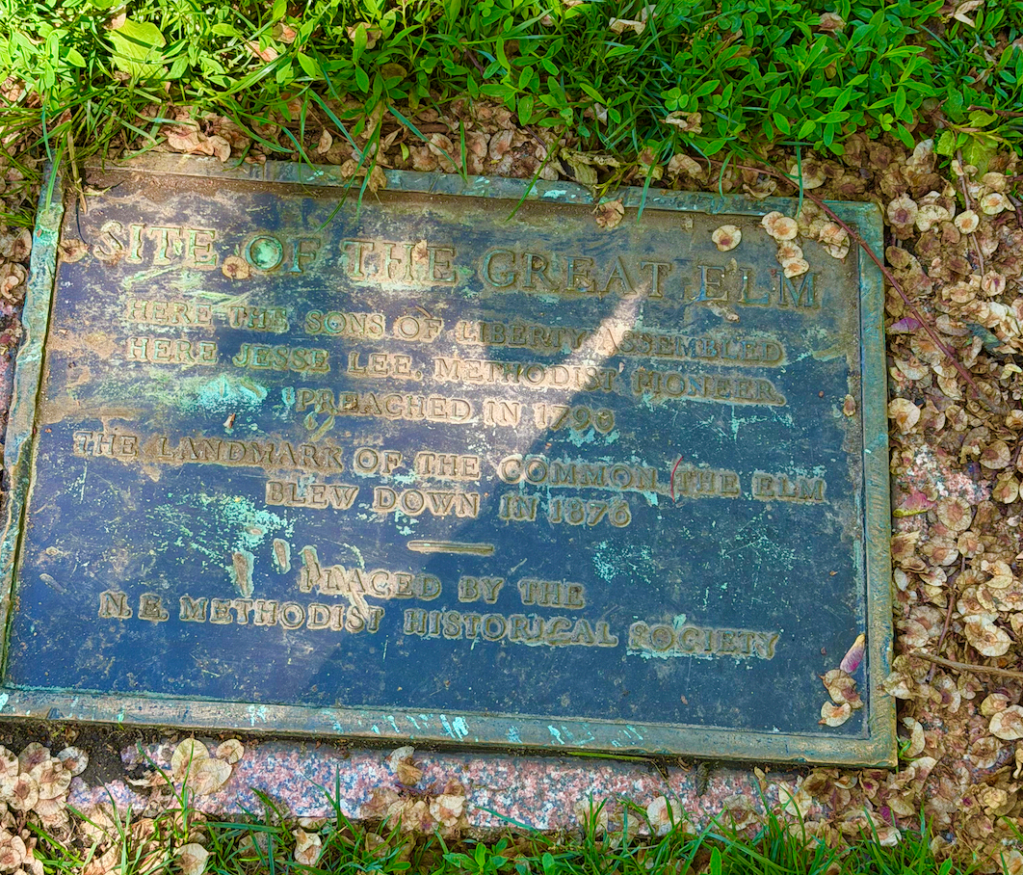
I had to brush debris off the plaque with my hands, but I finally found it. The inscription read:
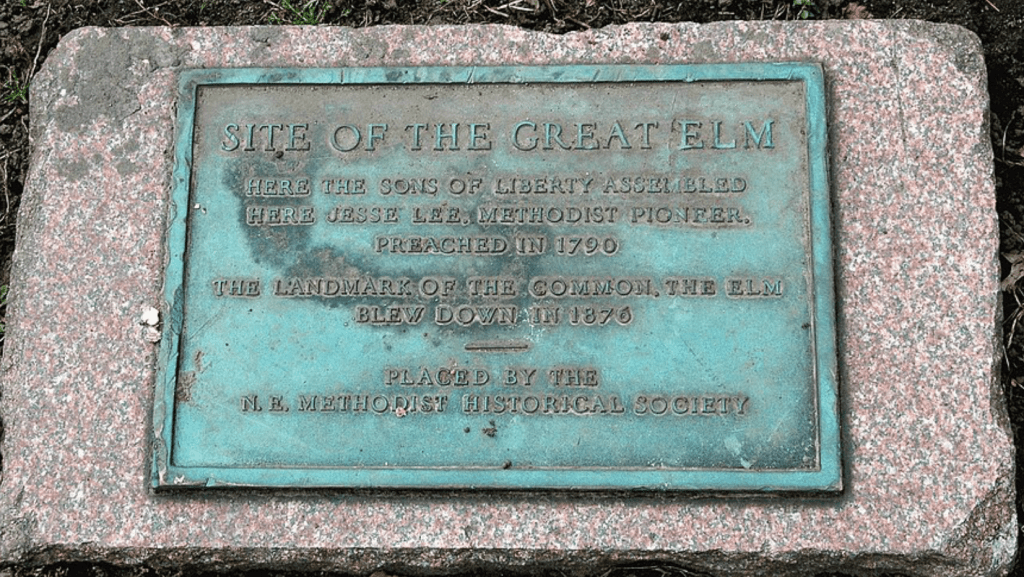
“Site of the Great Elm: Here the Sons of Liberty assembled; Here Jesse Lee, Methodist Pioneer, Preached in 1790. The landmark of the Common, the Elm blew down in 1876.”
There is no mention of the executions.
The Pirates
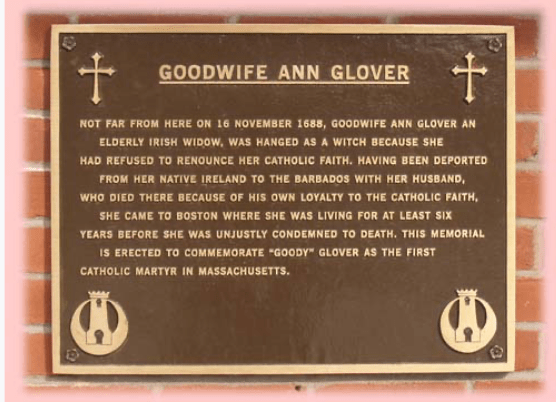
In the midst of my search for pirates who were executed, I found more buried treasure. The hanging of Ann “Goody” Glover occurred at the Great Elm in Boston in 1688, a precursor to the Salem witch trials of 1692. Ms. Glover was the last person to be hanged as a witch in Boston.
Hendrik Quintor was also hanged at the Great Elm in 1717. I noted Mr. Quintor because he was of African descent, and I began to read stories of pirates who captured ships during the transatlantic slave trade and freed the captives. In many cases, pirate crews were well integrated at the time. Mr. Quintor, a citizen of the Netherlands, was a survivor of a pirate shipwreck and was hanged for piracy and robbery. Another crew member of African descent was sold to John Quincy — the great-grandfather of John Quincy Adams.
…and More
The dive continues. I became aware of a more complex history of pirates and slave ships. Suddenly, I’m back to where I grew up — Hampton, Virginia — and Blackbeard. When Blackbeard captured slave ships, he freed many enslaved individuals, allowing some to join his crew; he also kept others as laborers, sold some into slavery, and treated them as valuable plunder. Somehow, with all the history in Virginia of settlers, 1619, and Blackbeard the pirate, I’d never associated these events as occurring concurrently.
Was this history obfuscated by design? Do we discuss pirates and the slave trade? We seem to barely discuss public lynchings as social events — do we dare speak of public executions as social events during the founding of this country?