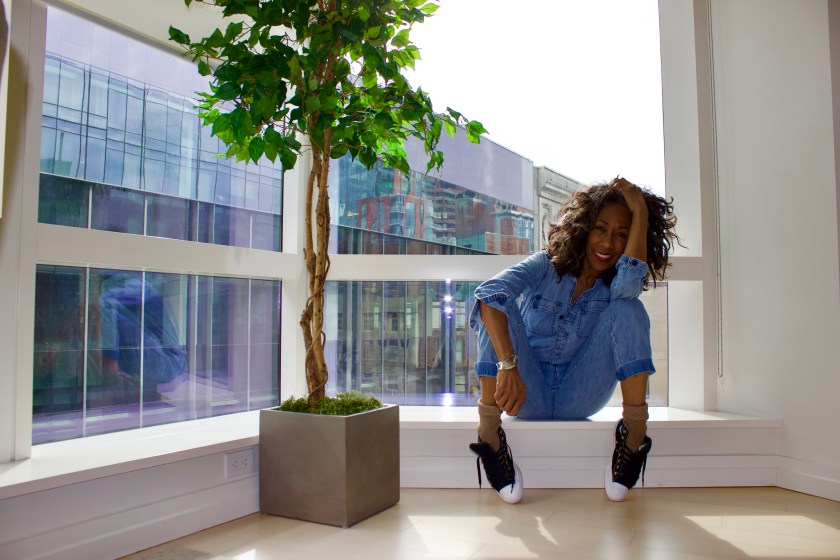
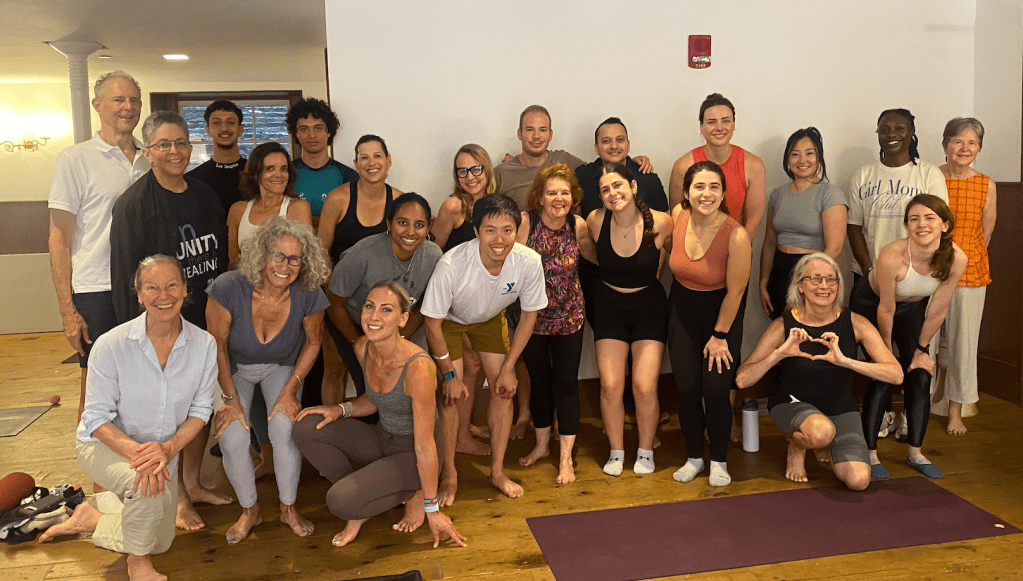
“This was a mistake — maybe it wasn’t the best idea to wear a denim jumpsuit when it is 80 degrees to teach a yoga class.” Yup, I said it out loud. I have the honor and the privilege to teach yoga once a month at the Museum of African American History in the African American Meeting House, built in 1806 — four years after Napoleon Bonaparte re-established slavery in France. The building is not particularly awe-inspiring like Trinity Church, built in 1877 with its murals, stained glass, and gargoyles, or the Boston Public Library, built with iconic sculptures and paintings. Yetits historical significance is rooted in my soul.
July 2025
This building was a site on the Underground Railroad. Luminaries in the abolitionist and suffrage movements met here on these very floors I can run my hands over. Unlike the other meeting houses in Boston of the time, which only allowed white males to speak, the African American Meeting House was a platform for all, regardless of gender or race. It was a community hub then as it is now, with concerts, book talks, story times, artist exhibitions, and monthly yoga classes. OK, this is where I come in.
I teach yoga there once a month and start with a short history blast as people come in and get settled. I wore what we would call a denim jumpsuit. Woad dye, bluish in color, was first used by the Celts. In France, in the late 1200s the fermentation of woad dye began to emerge as an industrial hub. Between 1660 and 1700, a wool and silk blend was dyed with the woad plant This material was developed in France and called sergé de Nîmes and shortened to de Nîmes — denim.
But way before that, in the 1100s a richer, deeper blue, indigo dye was developed that used a fermentation process also. West African countries would dye cotton Indigo and that cloth had significant cultural and spiritual significance.
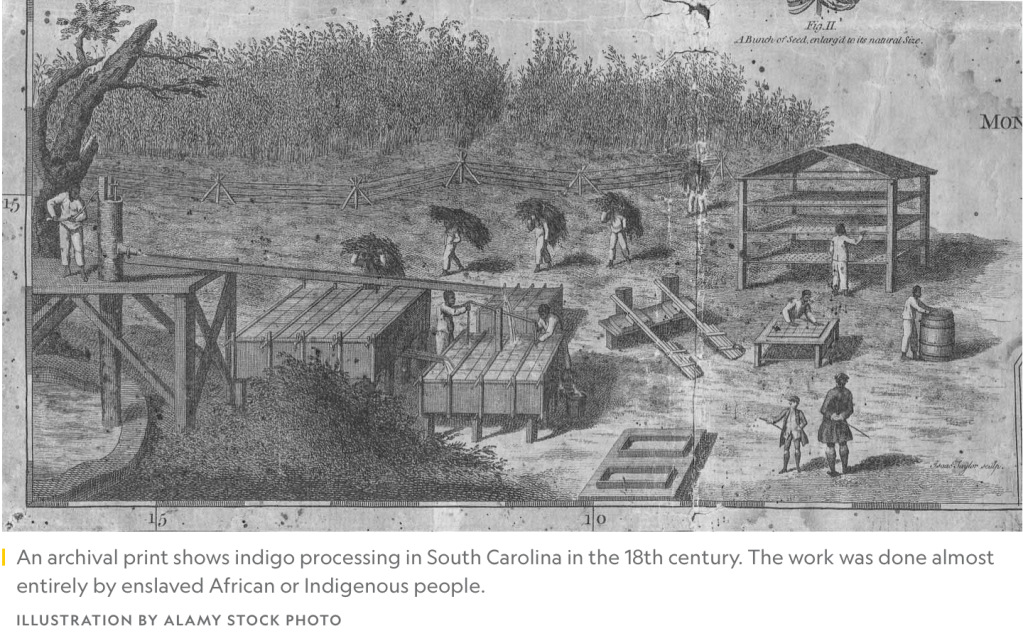
When global trade opened up, to protect sergé de Nîmes and dye production, France banned imports from Africa and India1 in 1598. The use of indigo dye from these regions was punishable by execution. This ban remained in effect until 1737 when French colonies used enslaved West Africans slaves to cultivate indigo plantations. The French were now able to import French indigo dye from the Carribean. Slavery was outlawed in the French colonies in 1794. And this brings us back to the start when Napoleon reinstated slavery in the colonies a couple of years before the African Meeting House open it’s doors and became the site of the abolitionist movement in Boston.
The British also had indigo plantations in the United States. Plantation enslavers purchased West Africans for their skill. These plantation produced indigo dye which was valuable for trade as well as dyed cotton fabric which became known as negro cloth as was used for garments worn by the enslaved. That’s why on this particular 80 degree day, I wore a denim jumpsuit to teach a yoga class. An ancestral tribute.
I am fascinated by history and global impacts and how we see repeated patterns, and sometimes the suppression of historical events. It was for this reason, the Museum of African American History, which is considered part of the National Parks, refused their funding this year. The current administration enacted two executive orders, Executive Order 14151 and Executive Order 14253.
THE EXECUTIVE ORDER – 14253
Restoring Truth and Sanity to American History (March 2025): Directs federal agencies, national parks, monuments, and the Smithsonian Institution to eliminate “divisive” or “anti-American” content. It tasks Vice President JD Vance with overseeing the removal of improper ideology from museums and the National Zoo.
Monument Restoration Mandate: This order requires the Secretary of the Interior and relevant agencies to identify and restore federal parks, monuments, and statues improperly altered or removed over the prior five years. This has led to the reassessment of exhibits focusing on slavery, Native American history, and climate change across sites like the National Mall and Independence National Historical Park.
THE IMPACT
Smithsonian Institution: Targeted for funding reviews to purge programs pushing “race-centered ideology”. For example, revisions have impacted planning for the American Women’s History Museum.
National Parks & Monuments: Physical exhibits—such as the “History Under Construction” exhibit detailing Coast Miwok Native history at Muir Woods National Monument—have been dismantled. Gift shops are also reviewing inventories to restrict books like The 1619 Project.
Federal Sites: Educational materials, such as those detailing African American and women veterans’ history on the Arlington National Cemetery website, were systematically removed or scaled back to comply with the directives.
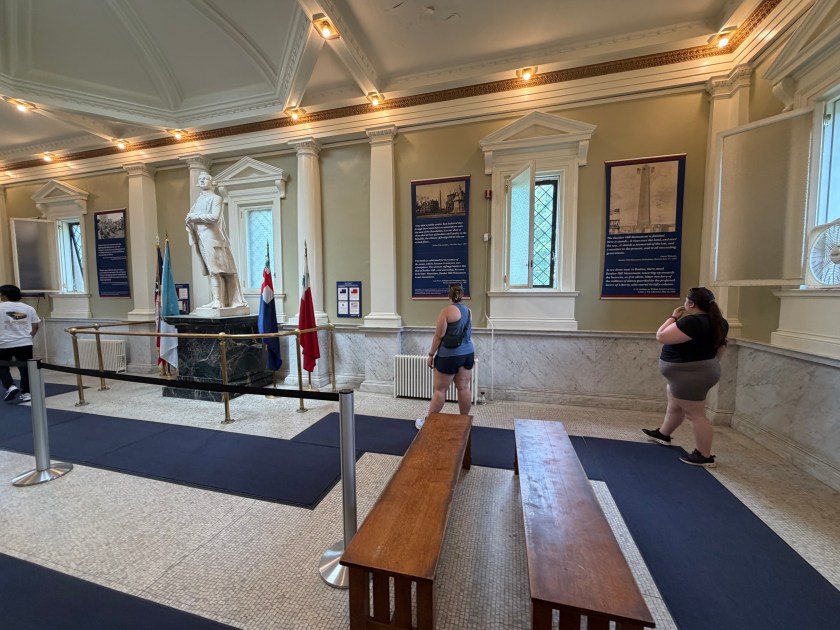
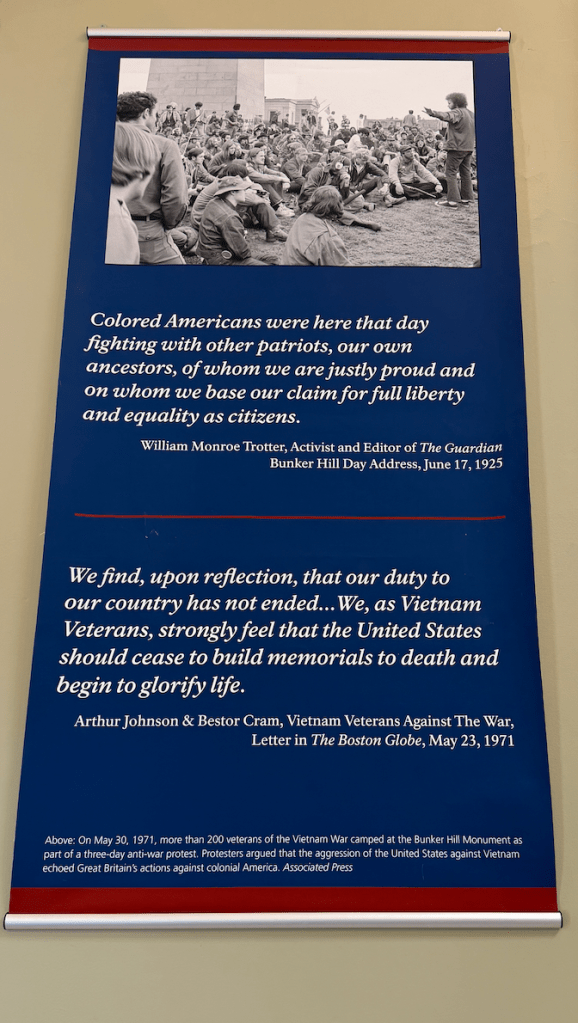
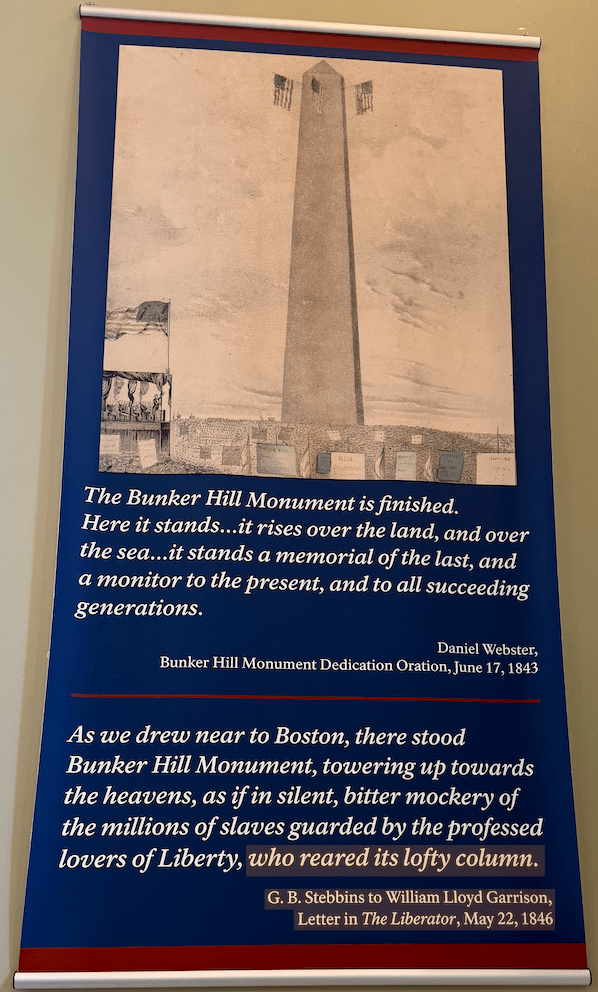
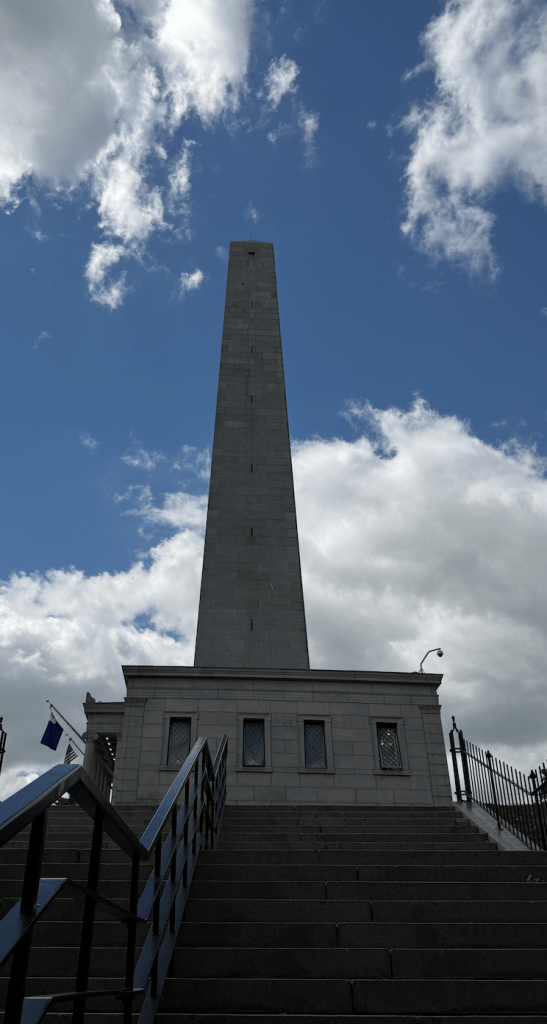
The choice by the Museum was not alarmist or extreme. This week, the current administration, in accordance with these executive orders, is removing three plaques from the Bunker Hill Monument, two of which mention the enslavement of African Americans. The third is about the acceptance of Irish Immigration.
Ironically, the review of the site was triggered by a visitor who filed a complaint about a suffrage quote as “woke” feminist ideology. “The woman suffrage battle is like that of Bunker Hill — not won today, but sure to be later. Meantime, Bunker Hill Monument is our monument.” — Lucy Stone. Today’s scavenger hunt was a trip to Bunker Hill today. I wanted to see the exhibit in context before the material is removed.
Colored Americans were here that day fighting with other patriots, our own ancestors, of whom we are justly proud and on whom we base our claim for full liberty and equality as citizens.
William Monroe Trotter, Activist and Editor of The Guardian Bunker Hill Day Address, June 17, 1925
We find, upon reflection, that our duty to our country has not ended… We, as Vietnam Veterans, strongly feel that the United States should cease to build memorials to death and begin to glorify life.
Arthur Johnson & Bestor Cram, Vietnam Veterans Against The War, Letter in The Boston Globe, May 23, 1971
As we drew near to Boston, there stood Bunker Hill Monument, towering up towards the heavens, as if in silent, bitter mockery of the millions of slaves guarded by the professed lovers of Liberty, who reared its lofty column.
G. B. Stebbins to William Lloyd Garrison, Letter in The Liberator, May 22, 1846
The voracity to eliminate any acknowledgement of the the skill, expertise, and work of African Americans —is disarming, from negro cloth to fighting in wars. It’s a true loss. 2This week, there was an incident at the museum site that is being labeled as a hate crime. The activity is on camera, by an older European American male. So no, it’s not in the past. It’s not just the current administration. It is my workplace, my happy space.
Bunker Hill, June 7, 2026
1In the 17th century, weavers in Dongri (a port district north of Mumbai) produced a coarse, heavy-duty, and cheap cotton cloth often dyed blue to hide dirt. Traded by the East India Company, the English referred to this rugged cloth as “dungaree.”
2To be clear, the Confederate monuments that were removed were installed as part of Jim Crow to intimidate. They were oversized on a grand scale and put on a pedestal. Should they have been removed? Those are the receipts. Putting them in the historical context of ‘how’ and ‘why’ is useful. It shows how deeply divided the United States was on the subject of human enslavement and how the South offered no contrition. The debate is current here with Faneuil Hall, where kidnapped Africans were sold and where the man who made his wealth through the slave trade funded the building. Should it be renamed? No, it should just be a place where history is noted in its historical context.



thank you, thank you
LikeLiked by 1 person