

Sometimes, I have to take a moment to realize I’m truly living a dream. This week was my first film festival. I was like a kid in Disneyland, albeit a weird one, as I took a t-shirt and made it into a skirt for festival wear. The Roxbury International Film Festival was such a gift, and here I am on a totally different track than I’d planned. After a week in which I saw 36 films, I thought this would be a few hot takes, shorts if you will. I had to kill my darlings.1
Transforming the Beautiful Game: The Clyde Best Story took me back to the ’60s. Back in 1969, Best was the first Black football (soccer) player for West Ham United at the age of 18. Best was not only the only Black player, but typically the only Black man in the stadium. The documentary featured reels of fans tossing bananas onto the field. It was heartbreaking. This was a child on his own, in another country. As I watched the World Cup masses now, almost 60 years later, much has changed — or has it?
There are 48 teams in the 2026 men’s World Cup. Of these teams, there is only one team that has no players of African descent. The entire Argentinian squad is of European descent. As I’ve said before, these posts send me on scavenger hunts. This is one of those times.
One of the best tours I’ve experienced was in Argentina. The tour guide in Buenos Aires told the history of the country through what was going on in other parts of the world. He highlighted the massive immigration of Europeans and, in almost hushed tones, included the massacre of indigenous Argentinians. There were three, and I’ve added events for context.
- The Conquest of the Desert (1870s–1880s) Around the time of the US Civil War
Led by General Julio Argentino Roca, this was a massive military campaign intended to establish Argentine dominance over Patagonia and the Pampas. The state-led expansion displaced, enslaved, and killed thousands of Indigenous people, predominantly the Mapuche, Tehuelche, and Ranquel communities.- The Napalpí Massacre (1924) – At the height of the American Eugenics Movement and the Rise of Fascism in Italy
Occurring in the Chaco Province, this event involved the state police and armed settlers brutally killing hundreds of Indigenous Qom and Moqoit people who were striking to protest forced labor conditions on cotton plantations. In 2022, the Argentine judiciary officially recognized this event as a crime against humanity and a state-sponsored genocide.- The Rincón Bomba Massacre / Pilagá Massacre (1947) – At the Conclusion of WW II
Also known as the Pilagá Massacre, this was a genocide committed by the Argentine National Gendarmerie against the Pilagá people in the Formosa province. Over several weeks, hundreds of Indigenous people were killed by gunfire, starvation, and toxic food in a tragedy that went officially unaddressed by the state for decades.
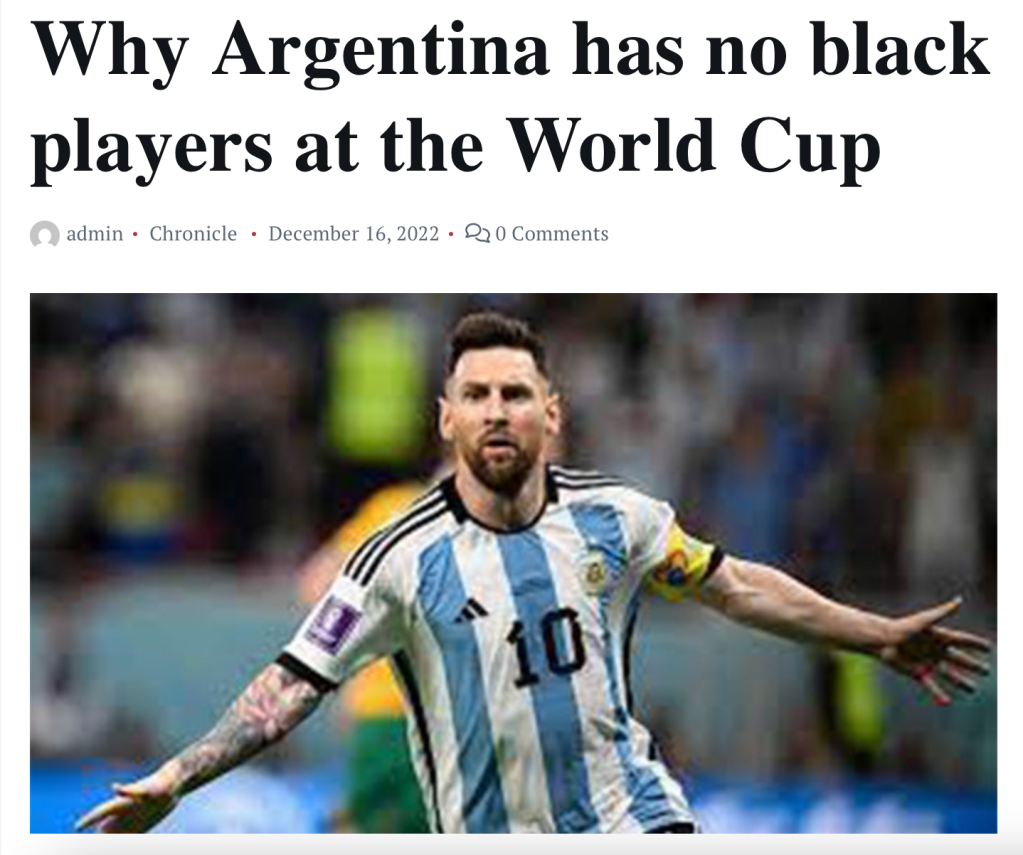
This article, from 4 years ago, goes deeper into Argentina’s campaign to be a white nation. I’m still perplexed. In the early 1900’s, Argentina’s population was a third black. The team has no players native Argentinian descent either. On the other hand, does the US team have Native Americans?
No. As the US is about to celebrate 250 years of the Declaration of Independence, are we a mirror to Argentina and colonization? The narrative continues to be, “you’re bringing up the past.” This isn’t living in the past — this is learning from the past and seeing the patterns.
In the documentary, Ade Coker described going to a beach in South Boston when he and his teammates were pursued by a mob. A white family hid them in a tent on the beach until law enforcement arrived. In his first visit to Boston since, he wanted to find the family — or relatives of the family — to thank them for saving his life. Every day, I go online to see if there is any follow-up to the story.
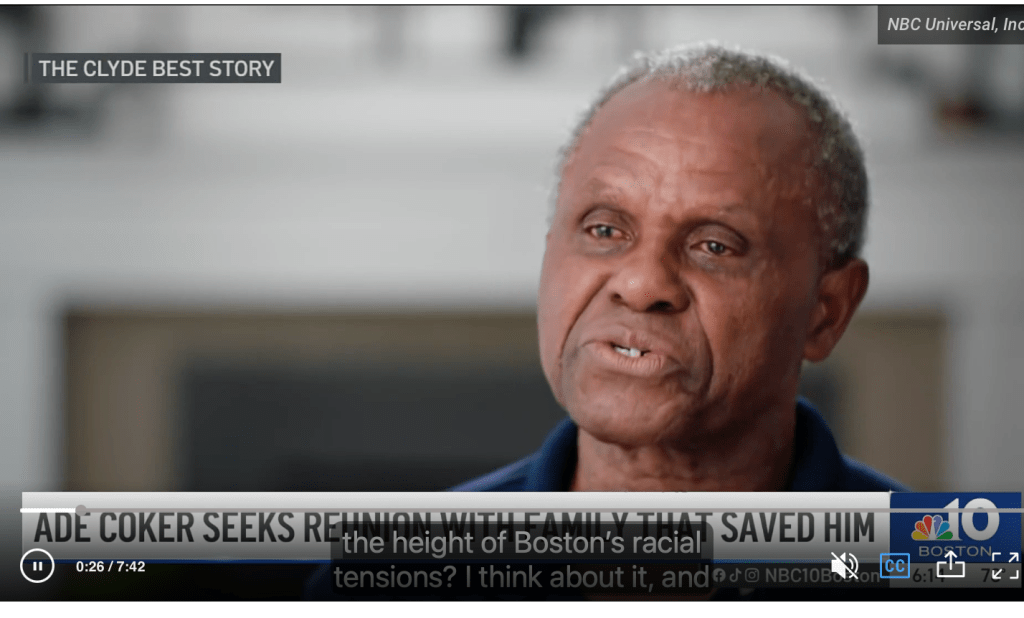
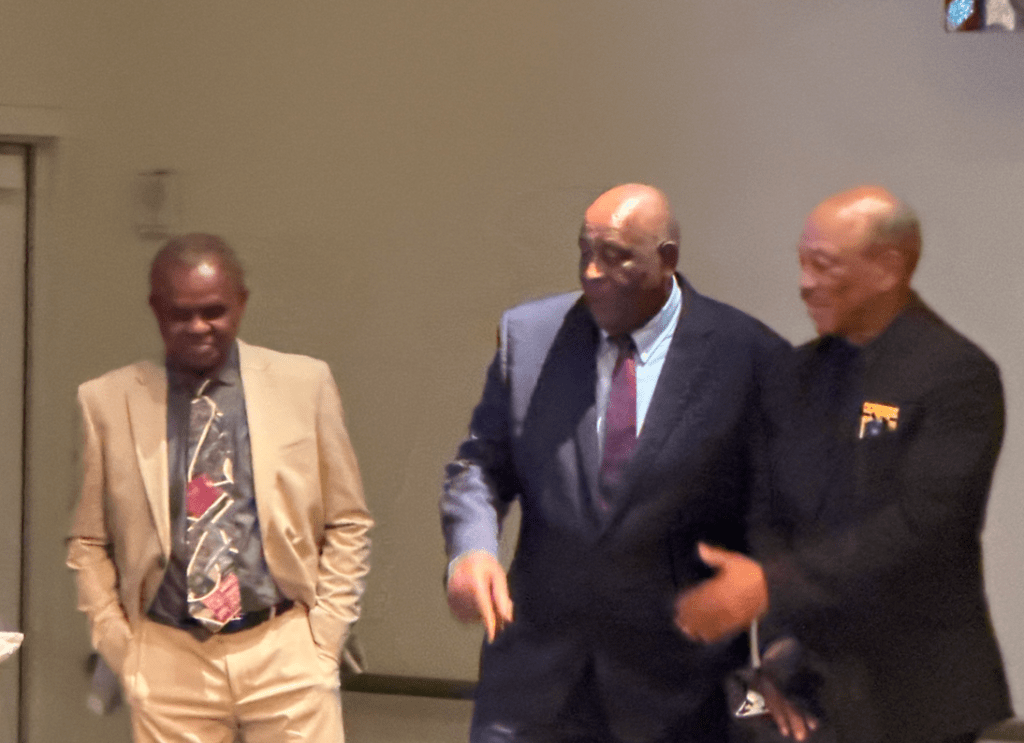
After the screening, Clyde Best and Ade Coker graced the stage. It was a moment of peaceful power. Clyde was interviewed here and it gives you a sense of the man and his legacy. Ade Coker sincerely wanted to find the family that saved him. I shook his hand as I left, sincerely hoping he would find that family, and it’s become an almost daily ritual that I look online.
What strikes me the most — none of this is ancient history. It’s more recent and urgent. I didn’t think much about what 50 years into the future would look like when I graduated from high school in 1976, a bicentennial graduate. Fifty years later, I have more years behind me than ahead. The entire film festival was somewhat like flipping through an old-fashioned photo album, pausing at memories, stories, events — things that resonated — and spending a few moments of reflection. Reflecting on the moments, living the dream, enjoying life.
1I walked with one of the directors/editors to the subway Friday night. He’d took his 43 minutes film and and cut down to 12 minutes for Gone Fishin’. He eliminated 2 characters and some scenes to get to the essence of the film, you know, “kill your darlings.” I’d heard it before and never understood it until that moment. As I reach the 12 year mark of blogging, it’s gotten easier because I am quicker to cut whole paragraphs that I love and but don’t necessarily move the story forward. Impact over length which was like that interaction. It was brief yet instructional and confirming.1
I am kind of cheating now, in wiring for this blog and article for SubStack, I do two different takes on the same event for the time being. You can view the SubStack Article here.

