
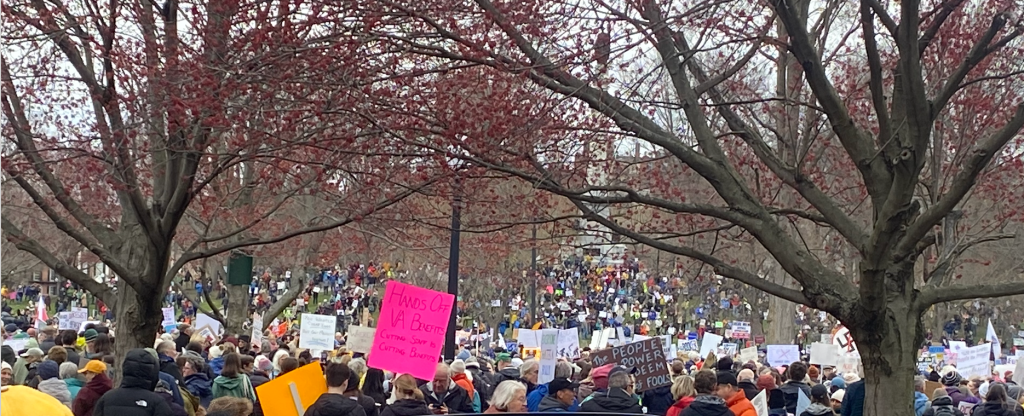
Not so fast. Saturday’s Hands Off March definitely had an impact, thousands participated. But, will it result in any change? Let’s look at numbers, history and effective strategies. The crowds looked amazing as I walked through Boston Common on Saturday morning. By straight up comparison, it was no where near close to the crowds for the Celtics victory parade. OK, that was a sports event. The inaugural Women’s March in 2017 had more participants also.

Look, it feels good to be around like minded people, to voice concern, show support, all good things. The compilations of protests on IG give me life; but feeling good and doing good are two different things. As a black woman who grew up with segregation, it’s apparent there are some history lessons that apply that people have not learned.

Boycotts! Many refer to the Montgomery Bus Boycott to end segregation as an example of political action. African Americans in Montgomery refused to take the bus until the system was integrated. The boycott lasted 13 months. Why did the boycott end? Hint: it was not the economic impact! It makes a great story, boycott for 13 months and get change. But that is not what happened. The boycott was part of a strategy. Draw attention to the struggle, show solidarity for the struggle which helps fund raise. Get money, hire lawyers and fight this in the Supreme Court. It was the Supreme Court ruling. To start, don’t forget, Rosa Parks was a plant an the plan was for her to be arrested and the boycott to follow. On 5 June 1956, the federal district court ruled in Browder v. Gayle that bus segregation was unconstitutional, and in November 1956 the U.S. Supreme Court affirmed Browder v. Gayle and struck down laws requiring segregated seating on public buses. To be clear, the boycott was part of the strategy, but, it was the Supreme Court that ended segregation in Montgomery Alabama.
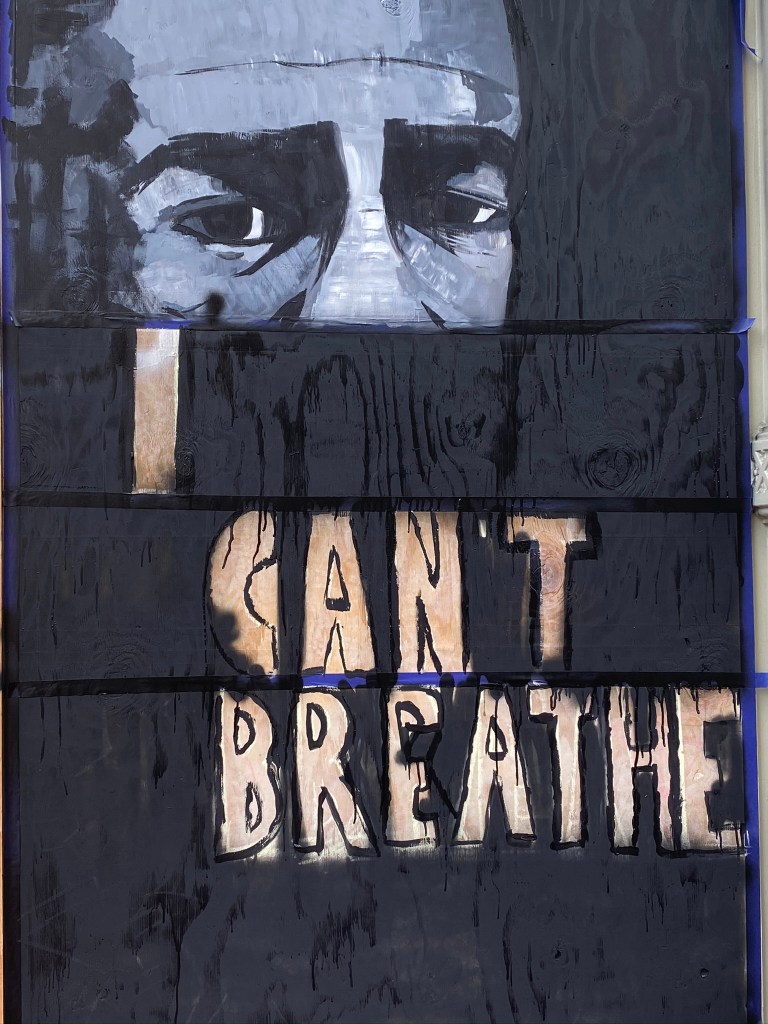
Marches! Same as above; draw attention to an issue and show support while there is a push for policy to change practices. After the bus boycott, there were marches to guarantee equal rights under the law. The civil rights movement was 14 years!!! FOURTEEN*. It feels good to think, take to the streets and voila, change. It seems like that was the case with George Floyd. Worldwide outrage and then it seems companies were suddenly embracing the need for diversity, they tweaked images to be inclusive, blah, blah, blah…all performative nonsense. Were there judicial changes? Not really. There were calls for police reforms. Chokeholds were banned, but did that result in any substantial changes in police and African Americans? Nah. Was there commitment? Almost 5 years later, who was performative and who is committed? Several times during his campaign and as part of agenda 47, Trump said he’d give immunity to police from prosecution. Suddenly this is OK? Oh, that’s right, historically, African Americans have been subject to unlawfulness by police and others have had the privilege of no concern. Back to the subject of marches, for effectiveness, they have to be part of a strategy, draw attention, raise funds (think all of the fund raising walks) and pursue legislative and judicial change.
Movements need sponsors. Sponsors have power and influence. In the case of the civil rights act of 1964, that would be President John F Kennedy and his successor President Lyndon Baines Johnson. Johnson signed the civil rights act into law. Go LBJ. Who are the sponsors engaged now? People who have power and influence? My friend wrote a wonderful piece on substack, Dear White People: Thank You for Showing Up. On Saturday, I talked to a wonderful woman enroute to protest. She commented her husband would not attend because he is on several boards. The statement from the post really stood out to me:
When presence is joined with privilege, something shifts. Not just the volume of the protest, but the weight of it. The power and possibility of it.

This sums it up. You know, last week, I said I’d cheer but not march. For me, this is why, I am a light weight. The movement needs sponsorship, the voice and participation of those with privilege and power. As Benjamin Franklin said “Justice will not be served until those who are unaffected are as outraged as those who are.” I am impacted with all the actions of the current administration.
Fifty Seven years ago, the reverend Dr Martin Luther King was assassinated on April 4th. Dr King spent time here in Boston, he received his PHD from Boston College, he met his wife here and he returned in the 60’s for a march from Roxbury to Boston Common. There is a statue in Boston Common dedicated to the Kings, it seemed rather fitting that on Saturday, there were peaceful protestors gathering near the statue.
When coaching people in business, I talk about sponsorship; who is advocating for you when you aren’t in a room. Projects without a clear goal and sponsorship languish. There is no urgency or commitment. This week consider the power of sponsorship. If you are concerned about political change in the US, think who are the sponsors for political change. In terms of power dynamics, do the sponsors you can identify have more power than those at the very top of leadership?
*Key Activist Actions:
Montgomery Bus Boycott (1955): Year-long boycott that highlighted the injustice of segregation in public transportation and galvanized the movement.
Sit-Ins (1960s): Students staged sit-ins at segregated lunch counters, challenging discrimination and gaining national attention for the movement.
Freedom Rides (1961): Activists rode interstate buses into the South to challenge segregation in transportation facilities, facing violence and arrests, but raising awareness of the issue.
Birmingham Campaign (1963): Martin Luther King Jr. and the Southern Christian Leadership Conference (SCLC) organized nonviolent protests in Birmingham, Alabama, where they faced brutal police repression, including the use of fire hoses and dogs.
March on Washington (1963): In August 1963, hundreds of thousands of Americans marched on Washington, D.C., demanding “Jobs and Freedom” and calling for civil rights legislation. Martin Luther King Jr. delivered his iconic “I Have a Dream” speech at the march, which became a symbol of the movement.
 Balancing on Unstable Surfaces