


That’s a mistake. It makes a point now, but not 50 years ago. The main character in The Women is about to leave home in her late twenties after serving in Viet Nam. Her doubts cause her to think “she’d never even had her own credit card.” The time was the summer of 1974. Women weren’t allowed to have their own credit cards in the United States until October of 1974. October 2024 will be the 50 year anniversary of the ability of women to own a credit card.
In Margaret Atwood’s the The Handmaid’s Tale written in 1985, right wing fundamentalists murder the US President and members of congress and go on to disenfranchise women by impounding their credit cards and denying them jobs and education. While some saw this as futuristic, an alternative narrative, some of the core concepts, to me, obviously followed that of the Iranian Revolution of 19791. History.
Spain has banned The Handmaid’s Tale, Portugal is trying to. In the US, the book is banned in Texas , Florida, Virginia and Oregon. To be more concise, in the US, these books are banned in school libraries. In 10th grade, I read The Exorcist and wrote a research paper. I went to the Hampton University library, to research, read articles on microfiche. To that end, I could not prove or disprove human demonic possession, only that people “believed” it to be.

Boston Public Library supports the rights of teens nationwide to read what they like without censorship. Teens and young adults ages 13 to 26 who live in the United States can obtain a free Books Unbanned eCard that allows access to the BPL’s collection of frequently challenged and banned eBooks and eAudiobooks. While I express outrage today with recent efforts to ban books and support the library, it’s ironic to live in the shadow of the infamous “Banned in Boston.” No joke, the Puritans of Boston once banned Christmas in 1659.
“Banned in Boston” is a phrase that was employed from the late 19th century through the mid-20th century, to describe a literary work, song, motion picture, or play which had been prohibited from distribution or exhibition in Boston, Massachusetts. During this period, Boston officials had wide authority to ban works featuring “objectionable” content, and often banned works with sexual content or foul language. This even extended to the $5 bill from the 1896 “Educational” series of banknotes featuring allegorical figures that were partially nude.
Banned in Boston
At the time of it’s release, The Exorcist was one the most banned books. I managed read and write my paper prior to the ban. As a student, this spawned critical thinking, logic, the ability to form a hypothesis and research. Books have ideas that allow us to explore, imagine to know different worlds and places. You can agree, disagree, or just toss the book across the room as rubbish. But, it is your choice to read or not read. As with libraries, it’s your choice to read or not.
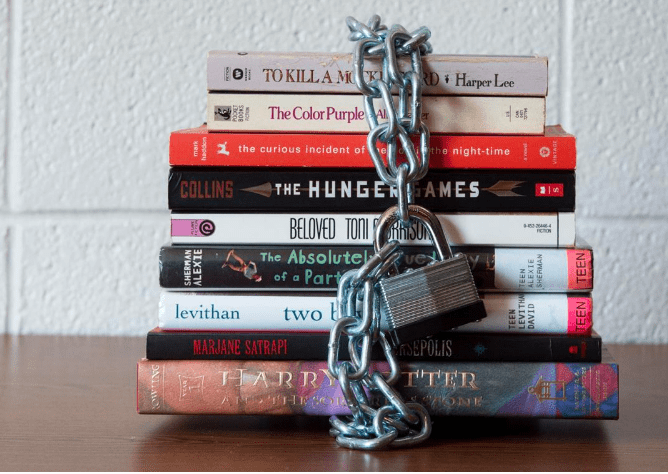
Conservative right leaning groups have organized and sprung up since 2021 with an increased fervor to ban books, deliberate, strategic and well funded. Like I found with research of exorcism, beliefs are powerful with or without proof. The question of banned books is are ideas dangerous? Who decides? The trend that makes me sound the alarm is banned books have become banned history, for example, The 1619 Project.
You can’t store up Democracy like money. Democracy is not like a savings plan, an investment strategy or an emergency fund. There is no emergency democracy fund. No. By the time there is an emergency, it’s too late. Without history, we experience angst and frustration with what should be, what’s possible, and we anger because we don’t have the foundation of probable. Change into the probable takes more time than possibility. The human body is capable of running a 4 minute mile. Let’s be generous and double that number and ask, can everybody run an 8 minute mile?No! Estimates are all less than 5% of the population can. Why? Your body type, age, training, blah, blah, blah…your history! Possible versus probable. Right, wrong or indifferent, our reality is historically dependent.
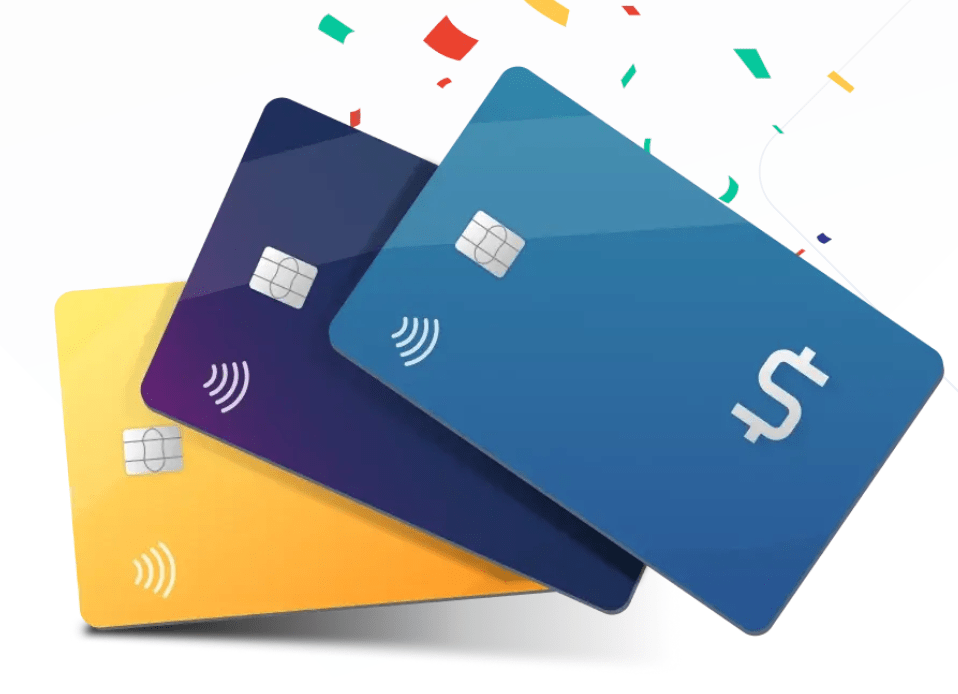
Maybe democracy is more like a credit card? Available to some but not all. Designed as a money making proposition for a few and abused by many. For it to work, it must be treated as a privilege; strategic aspirations must be grounded in probable reality. That does not kill a dream or a vision, it’s to plan for successes based on how far we’ve come.
*You’ve Come a Long Way, Baby was derived from a marketing slogan for Virginia Slims cigarettes in 1968
 Balancing on Unstable Surfaces
Yes this Bous!
LikeLiked by 1 person
I have just finished the book, in English, lent by a public library, and we are going to comment on it at the public librarh book club this afternoon. I live in Barcelona.
LikeLiked by 1 person