

Stop. We’ve lost the context and muddied the plot. This trend to remove “offensiveness” from literature, film and song is not good. In 2011, The Adventures of Huckleberry Finn was updated to replace nigger with slave. for a total of 295 replacements. This came about because:
An English professor at Auburn University at Montgomery proposed the idea to the publisher because he felt the pervasive use of the slurs made it more difficult for students to read the book. In an introduction to the new edition he wrote, “even at the level of college and graduate school, students are capable of resenting textual encounters with this racial appellative.”
Huck Finn and the N-word
Leave the text alone. It shows the callousness, the insensitivity and that moment in time, or as it were in this case, centuries. Editing is whitewashing in a literal form. Changing Injun to Indian in the book? STOP. This practice starts a doom loop because, now, slave should be replaced with enslaved.1
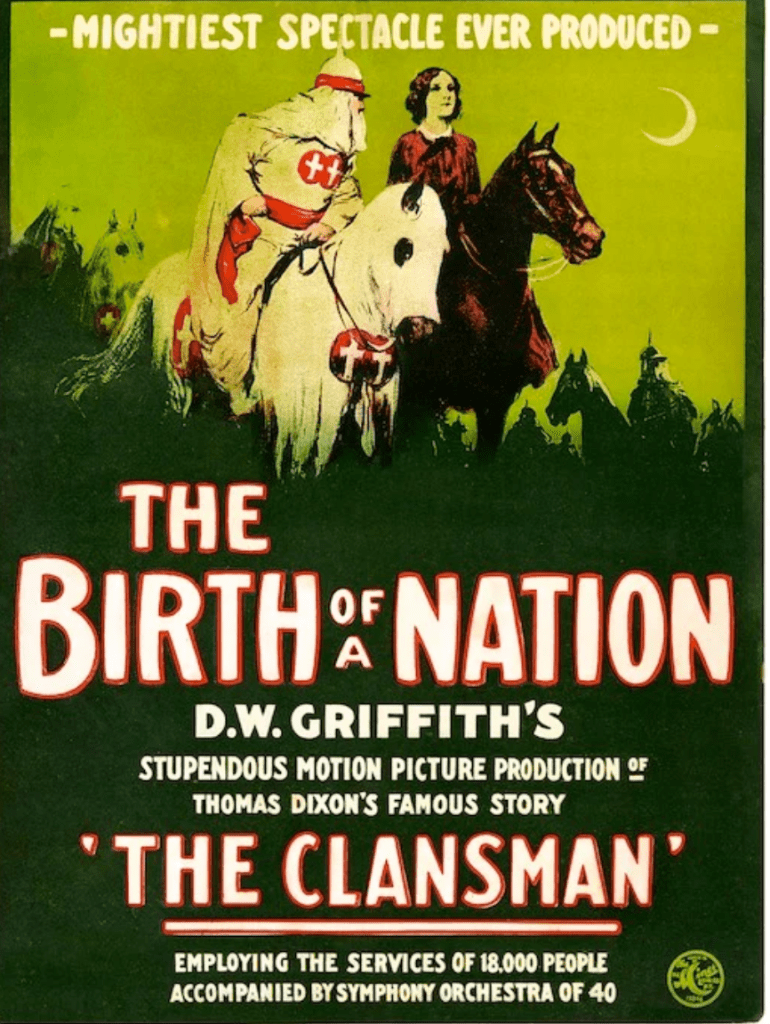
The movie “Birth of a Nation,” by DW Griffith is considered a “classic.” The Civil War movie features the Klu Klux Klan (KKK) as heroes and white women as victims who need protection from sexually depraved black men. White actors in black face portrayed the black characters. The depiction of cross burning by the Klu Klux Klan in the film started the practice of cross burning by the KKK. It should also be noted, the Klan now refers to it as cross lighting and freedom of speech.
Birth of a Nation was released in 1915, fifty years after the civil war. The public had little knowledge or experience with slavery at that time. Taken as history and truth, it incited violence and racism towards African Americans, spewed falsehoods that still hold today over 100 years later. In February 1915, upon viewing The Birth of a Nation at a special White House screening, President Woodrow Wilson reportedly remarked, “It’s like writing history with lightning. My only regret is that it is all so terribly true.” It sounds messy and it is, this is a complex history.

To quote Larry Wilmore “…these are the receipts,” and I agree. Buzz words like cancel culture have gone to far and like political correctness, have made us stupid. We’re scared and cautious about how we speak rather than have allowances to learn and show grace. Is redemption only allowed for the fictional Ebenezer Scrooge?
There are deplorable people, myopic in vision, stunted in intellect and egotistical narcissists.(e.g. 2) Their rhetoric is harmful and dangerous and this is not to condone or encourage their behavior. This is about everyday dismissal. A blog post comment a few weeks ago reminded me how Richard Pryor would not have been able to do his routine today; yet, it is an accurate reflection of the time.
Would we want all forms of Richard Pryor media banned? Should we have the choice to listen, watch read and then, like my parents and Mrs Bryant say no, this is not for me? Mark Twain’s response over the Huck Finn controversy in his day was “Censorship is telling a man he can’t have a steak just because a baby can’t chew it.” This week, consider censorship, find & replace, and bans. Should we have cancel culture3 or civil discourse?
1The noun slave implies that she was, at her core, a slave. The adjective enslaved reveals that though in bondage, bondage was not her core existence. Furthermore, she was enslaved by the actions of another. Therefore, we use terms like enslaver, rather than master, to indicate one’s effort to exert power over another.
3Cancel culture refers to the popular practice of withdrawing support for (canceling) public figures and companies after they have done or said something considered objectionable or offensive. Cancel culture is generally discussed as being performed on social media in the form of group shaming
 Balancing on Unstable Surfaces