Today, April 4, 2026, is the 60th anniversary of the assassination of the Reverend Doctor Martin Luther King Jr. King was born in 1929, the same year as Anne Frank, ten years before World War II, and at the height of the eugenics movement in the United States. Dr. King has deep ties to Boston, as does the eugenics movement.
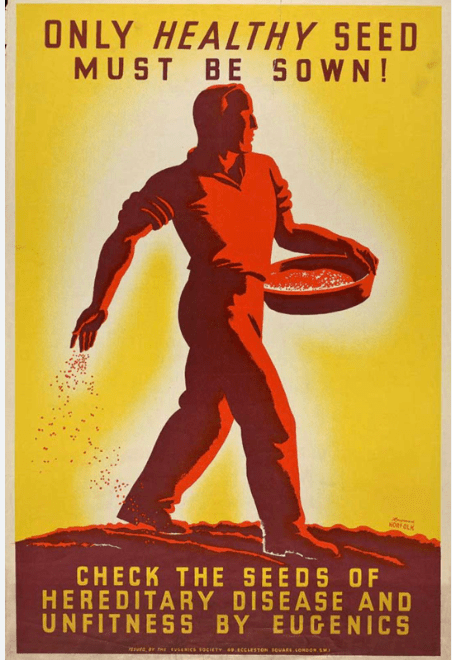
Eugenics is the control of reproduction to increase desirable traits and eliminate undesirable ones. Its roots go back to the era of Thomas Jefferson, when the United States and Europe attempted to justify enslavement through racial classifications. However, that is more than 100 years before the start of this story.
Returning to eugenics and Boston, the Immigration Restriction League was founded there in 1894 by Harvard graduates. It is a reminder that restrictions on immigration are nothing new in the United States, but have, at times, served as a guiding principle of supremacy.
The American Eugenics Society was founded in 1922 to promote eugenics at both scientific and popular levels. Its members included both scientists and citizens, with strong involvement from the Carnegie Institution.
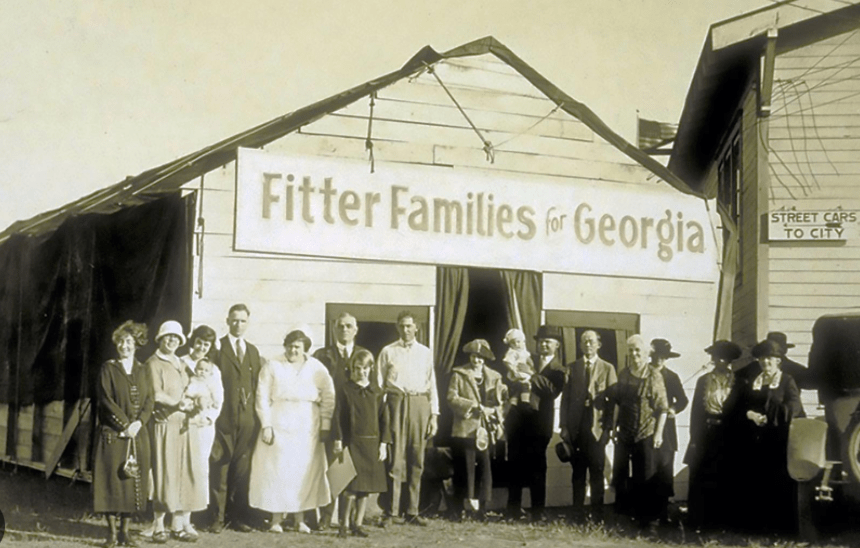
They held”Better baby” and “fitter family” competitions at state fairs, where people were judged on their “eugenical worth” – their desirable traits…
They argued that immigrants from Southern/Eastern Europe would “pollute” the national gene pool, influencing immigration laws, such as the 1924 Johnson-Reed immigration restriction act
Working with politicians and government, enabled laws mandating the sterilization of approximately 60,000 disabled, poor, or marginalized individuals.
Legal Validation: In 1927, the Supreme Court upheld compulsory sterilization in the Buck v. Bell case.
Spoiler alert: Who took note of all of this and used it as a foundation? Adolf Hitler. But before we discuss Hitler, a disclaimer: American eugenics was not some fringe movement—far from it.
David Starr Jordan: The founding president of Stanford University, who published “The Blood of the Nation” (1902), arguing that poverty and talent were inherited traits passed through “blood”.
John Kellog – (Yes, of Kellog’s cornflakes) organized the first conference on racial betterment in 1913.
Alexander Graham Bell – The inventor of the telephone; he served on the ERO board and conducted extensive research on hereditary deafness, advocating for marriage restrictions to prevent its spread.
Theodore Rosevelt in 1905, coined the term “race suicide” to warn that native-born, white Americans were failing to have enough children compared to immigrants and minorities, threatening the dominance of the Anglo-Saxon race.
Maraget Sanger – Founder of Planned Parenthood; she aligned the birth control movement with eugenics to “weed out the unfit” and prevent the birth of those she deemed “defectives”.
Woodrow Wilson, the 28th president of the United States (1913–1921), operated within an intellectual, political, and academic context that heavily favored eugenics and scientific racism during the Progressive Era. As a proponent of “race betterment” through, in his view, scientific and rational governance, Wilson supported eugenic policies, including forced sterilization for the “unfit” and the segregation of federal employees based on race
WEB Dubois – Civil Rights leader, first African American to receive a PHD from Harvard in 1895. Du Bois sought to use eugenic principles to prove that African Americans were capable of producing a “talented tenth” that could compete with the best of white society, thereby dismantling claims of racial inferiority. He supported birth control for African Americans as a necessary tool for the race’s advancement. 1
Oliver Wendell Holmes Jr.: Supreme Court Justice who wrote the majority opinion in Buck v. Bell (1927), which legalized forced sterilization in the U.S., famously stating, “Three generations of imbeciles are enough”.
This is both history and the present. The U.S. is the only major industrialized, high-income nation without a system of universal healthcare. Some lawmakers’ belief in the inferiority of Black Americans led to the idea that the Black population would decline and “solve” the so-called race problem without access to healthcare. This is why history matters. Back to the subject at hand: enter Adolf Hitler.
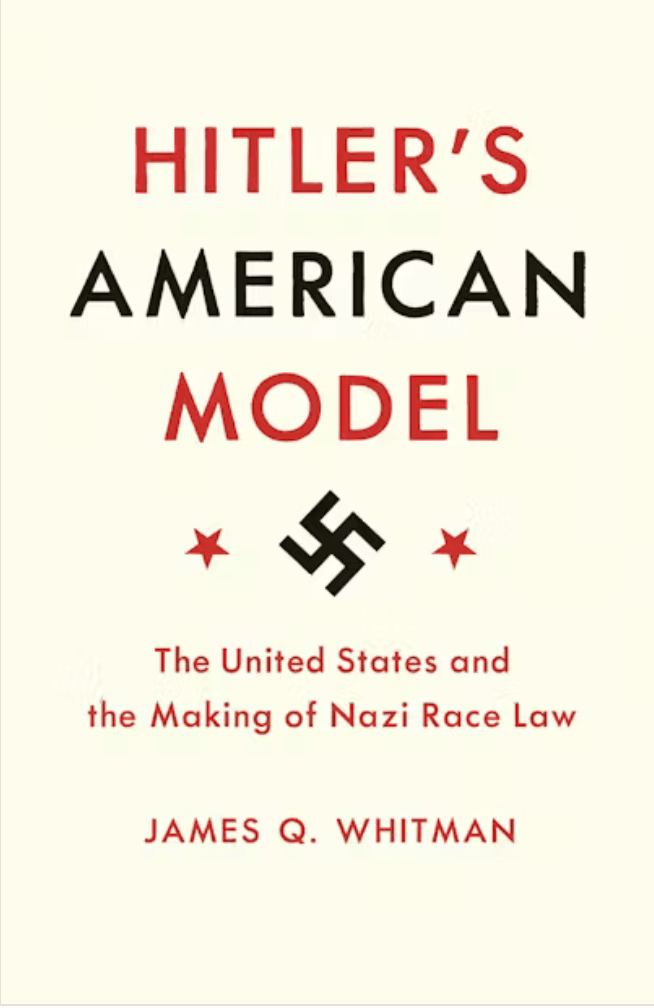
American eugenics, along with well-established Jim Crow laws enacted to suppress the autonomy of African Americans, inspired him and helped form the foundation of the Nazi framework.
Forced Sterilization Laws: Hitler studied American eugenics laws, particularly in California, which was a leader in forced sterilizations. The 1933 Nazi “Law for the Prevention of Offspring with Hereditary Diseases” was directly inspired by US sterilization models, aiming to eliminate “genetic poisons”.
“Blood Fraction” and Anti-Miscegenation Laws: German experts on race studied US laws that prohibited interracial marriage to define “who was a Jew”. They used Virginia’s 1924 Racial Integrity Act, which applied strict “blood” standards, as a reference point for their own Nuremberg Laws in 1935.
Model Institutions and Publications: The Kaiser Wilhelm Institute for Anthropology, Human Genetics, and Eugenics was built with funding from the Rockefeller Foundation, and German eugenicists viewed their U.S. counterparts as mentors. Nazi literature, including Mein Kampf, drew from American eugenicists like Madison Grant and Lothrop Stoddard, whose writings on “Nordic” supremacy were highly regarded by Hitler.
Immigration Restrictions: The Nazis specifically referenced the US Johnson-Reed Immigration Act of 1924, which placed strict quotas on immigration, as a guide for their own immigration policies.
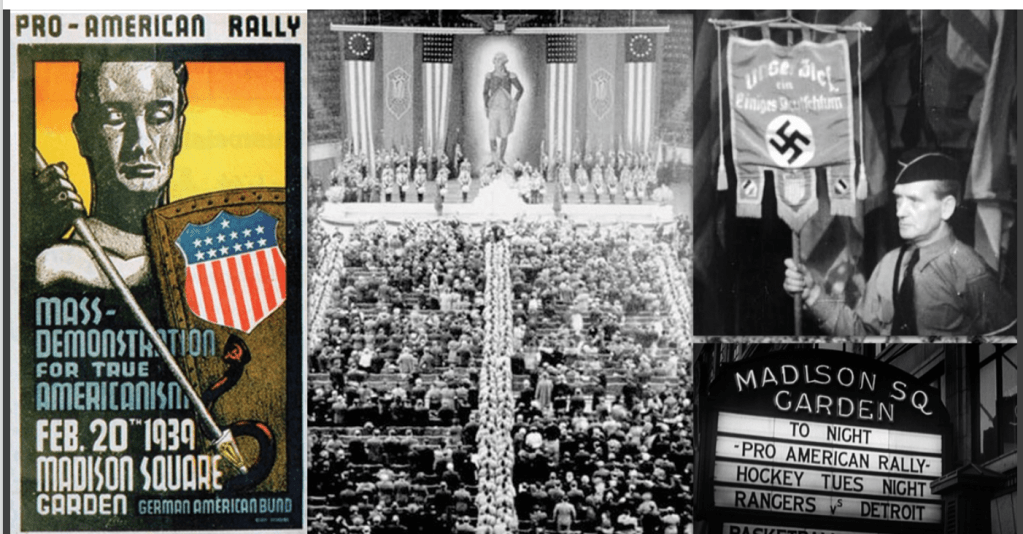
That brings us to the 1939 Nazi rally at Madison Square Garden. Martin Luther King Jr. had just turned 10 years old, and Anne Frank would turn 10 a couple of months later.
On February 20, 1939, a Nazi rally took place at Madison Square Garden, organized by the German American Bund. More than 20,000 people attended, and Fritz Julius Kuhn was a featured speaker. The Bund billed the event, which took place two days before George Washington’s Birthday, as a pro-“Americanism” rally; the stage at the event featured a huge portrait of George Washington with swastikas on each side.[1] Anti-Nazi counter-protesters gathered outside and on three occasions attempted to break through lines of police officers guarding the rally.
The power of the Bund rapidly declined after the rally. This was not due to the outbreak of World War II, but due to Kuhn being imprisoned for embezzlement by the end of the year and his successors being prosecuted for espionage.
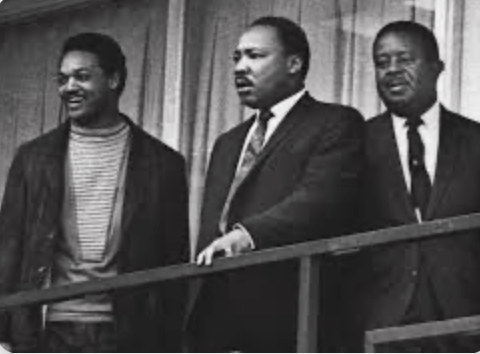
Connecting back, Dr. King and W. E. B. Du Bois corresponded regularly, though they never met in person. Dr. King delivered the keynote address at a Carnegie Hall benefit commemorating Du Bois’s 100th birthday on February 23, 1968—honoring a civil rights icon only weeks before his own assassination on April 4, 1968.
WEB Dubois engaged with the concepts of eugenics during the early 20th century, not by supporting the mainstream white supremacist, anti-Black version, but by incorporating a form of “Black eugenics” into his strategy for racial uplift. While he fiercely fought against the biological determinism used to justify racism, Du Bois believed that the conscious improvement of the race’s “quality” through education, health, and selective reproduction was essential for Black liberation.was later framed as “black eugenics” to escape U.S. government persecution during the McCarthy era, embrace Pan-Africanism. He moved to Ghana to escape U.S. government persecution during the McCarthy era. ↩︎


 Balancing on Unstable Surfaces