

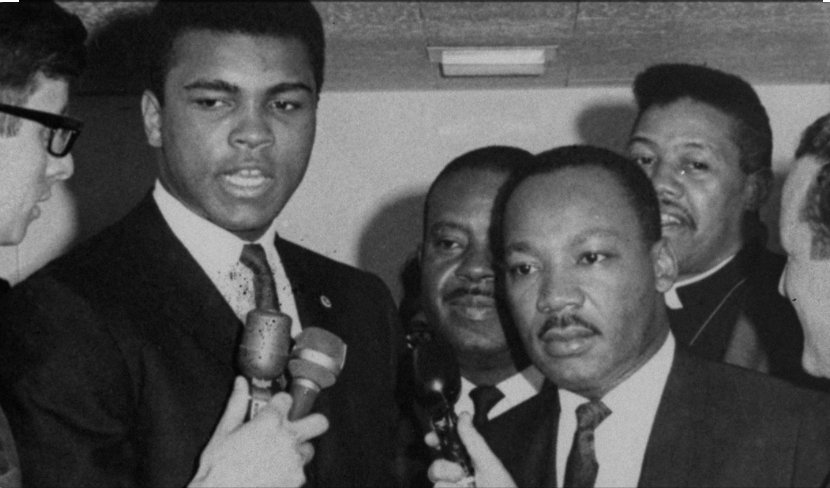
The Reverend Doctor Martin Luther King was assassinated 57 years ago, April 4, 1968. Mohammed Ali died 9 years ago, June 3, 2016. I am living history, I was around for all of this. To many, the idea that these two were friends and were contemporaries may be a revelation. Cassius Clay won the world heavy weight boxing title and changed his name to Mohammed Ali1 in 1964, less than a year after Martin Luther King’s historic March on Washington.2 The two men began communicating with each other in 1961 and met in person in 1967 in Louisville Kentucky. Now you know this was trouble; two influential Negro men of the time in a photo op who both opposed the Viet Nam War. The FBI, under the direction of J Edgar Hoover, began monitoring Martin Luther King in 1955 under Counter Intelligence Programs (COINTELPRO.) King’s phones were tapped, his locations were bugged, his extramarital affairs recorded and the US government circulated information that characterized King as a communist and a moral degenerate. The FBI, under the direction of J Edgar Hoover, started investigation of Mohammed Ali in 1966 because of his opposition to the Viet Nam War.
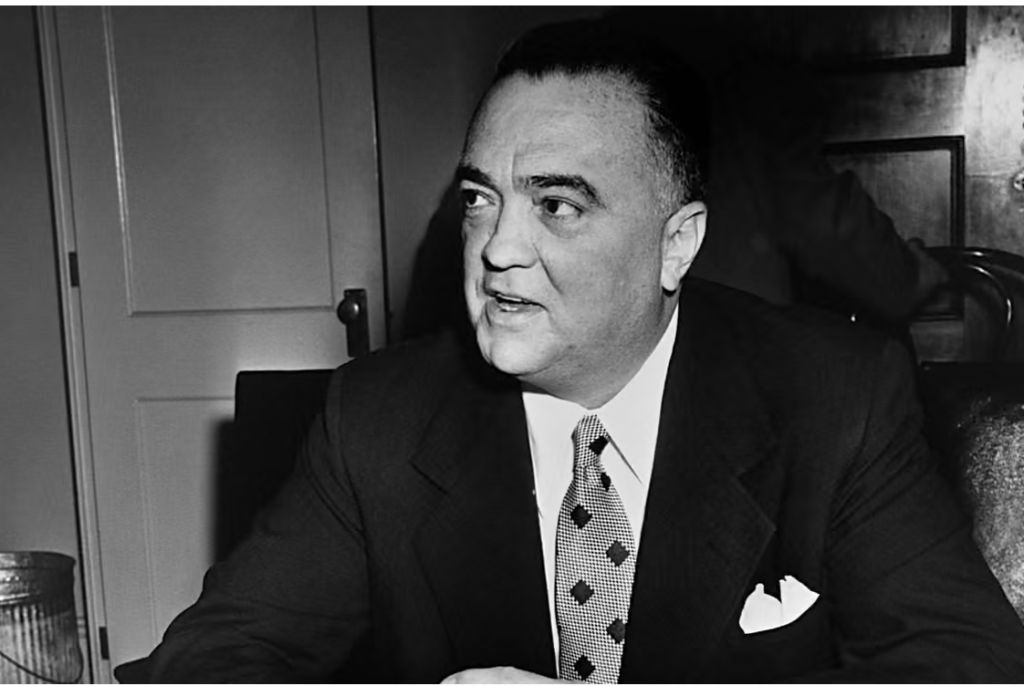
Hmmmm, opposition to a war can trigger an FBI investigation? Or, was it more like a J Edgar Hoover overreach? J Edgar Hoover was born on January 1, 1895. While Hoover is credited with the modernization of the FBI, he was also known for his secretive abuses of power. He violated both the FBI’s own policies and the very laws which the FBI was charged with enforcing. He used the FBI to harass and sabotage political dissidents. He extensively collected information on officials and private citizens such as using illegal surveillance, wiretapping, and burglaries. Hence, Hoover amassed a great deal of power and he intimidated and threatened high-ranking political figures.
But the full story wasn’t being told. In fact, Nixon had hoped to push Hoover out of the job just a few months earlier but feared the director’s retribution. At least four other presidents reportedly had hoped to remove him as well but were unable to or didn’t dare.
Hoover was no American hero. He was a bigot, a racist and a homophobe — a conspiracy theorist who amassed and abused enormous power, pursued his enemies unscrupulously and trampled on the civil liberties of law-abiding American citizens.
Why do we still honor J. Edgar Hoover’s racist, homophobic legacy?
J Edgar Hoover served under 8 presidents for 48 years from 1924, post WWI until his death in 1972. The FBI, under J Edgar Hoover, identified over 800 communist spies in the US and estimated there to be over 20,000 communist spies in the US. Today, that estimate has risen to over 100,000 communist spies in the US. The Truman Doctrine of 1947 required all government employees screen for loyalty and set up the Central Intelligence Agency (CIA.) Not to diminish the idea of Soviet threats and Communists spies, take another view. Why relentlessly pursue these two men with much bigger threats? J Edgar Hoover, out of bigotry4, abused his office and power against both King and Ali. Yet, Hoover, with all of his illegal actions, hatred and spread of disinformation, he could not seem to tarnish either man. Both men, in spite of his best efforts are icons in American History and examples of a belief in peace and compassion.
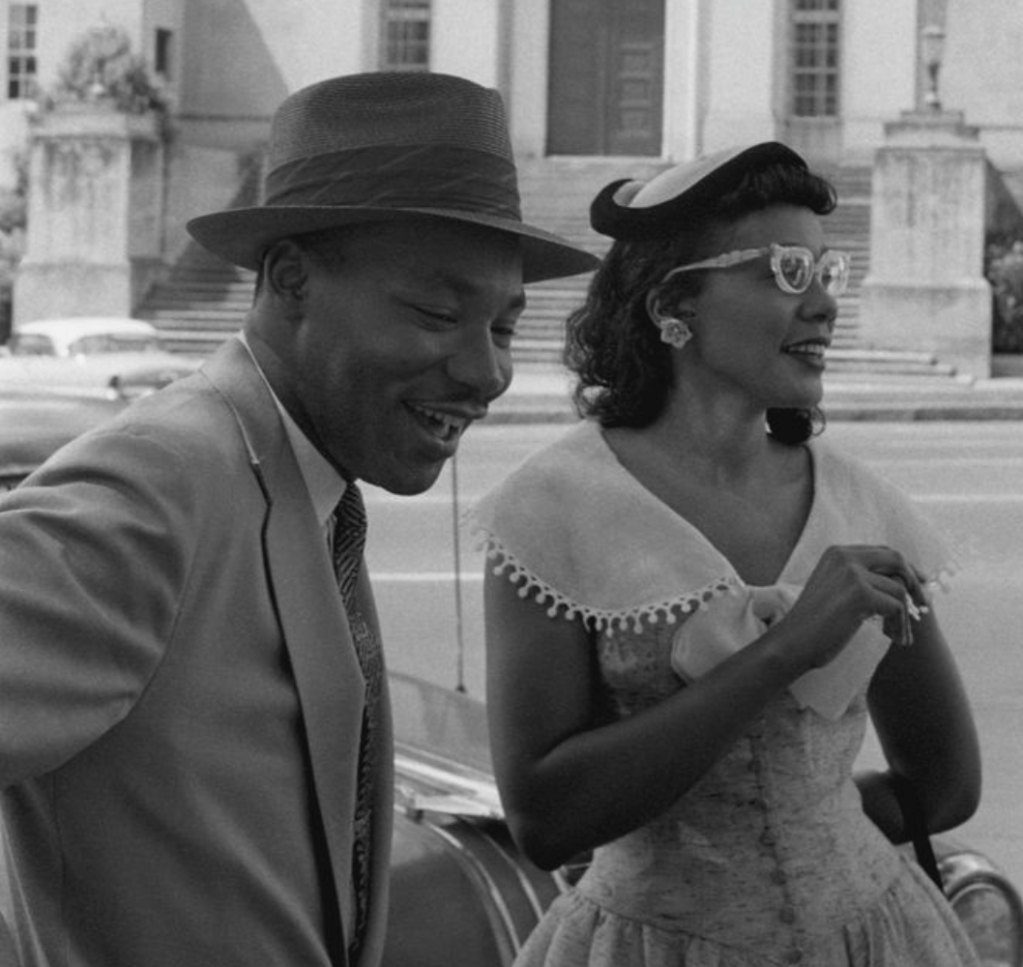
Sometimes writing a blog post, this is number 555, takes me to a place a didn’t expect to go. Just as in life. Today, I’m here in Boston. A city where Martin Luther King was a doctoral student at Boston University and met his future wife, Coretta and the two are memorialized with he Embrace Statue in Boston Common across the street. Boston, where Hồ Chí Minh, 1st President of the Democratic Republic of Vietnam worked at the Parker House Restaurant down the street when he attended MIT. Boston, where a 10 minute subway ride takes me to Cambridge where Mohammed Ali delivered the commencement speech for Harvard College in June of 1975. On MLK day, my tradition is to revisit his writings and speeches on Viet Nam. This year, I can do it here in Boston, living history.
1Cassius Clay changed his name to Muhammad Ali after converting to Islam and joining the Nation of Islam, believing his birth name “Cassius Clay” was a slave name and choosing a new name that meant “beloved of God” to represent his newfound identity as a free man.
2 The March on Washington, which took place on August 28, 1963, was a pivotal moment in the Civil Rights Movement, where an interracial group of 250,000 gathered in Washington D.C. to protest racial discrimination and advocate for civil rights legislation. The highlight of the event was Martin Luther King Jr.’s iconic “I Have a Dream” speech. The event significantly shifted public opinion and helped pave the way for the passage of the Civil Rights Act of 1964.
3 Hoover expanded the FBI into a larger crime-fighting agency and instituted a number of modernizations to policing technology, such as a centralized fingerprint file and forensic laboratories. Hoover also established and expanded a national blacklist, referred to as the FBI Index or Index List.
4Hoover withheld evidence that would have lead to the prosecution of the Birmingham Church bombing that killed 4 black girls in 1963.
 Balancing on Unstable Surfaces
a great post!
LikeLiked by 1 person